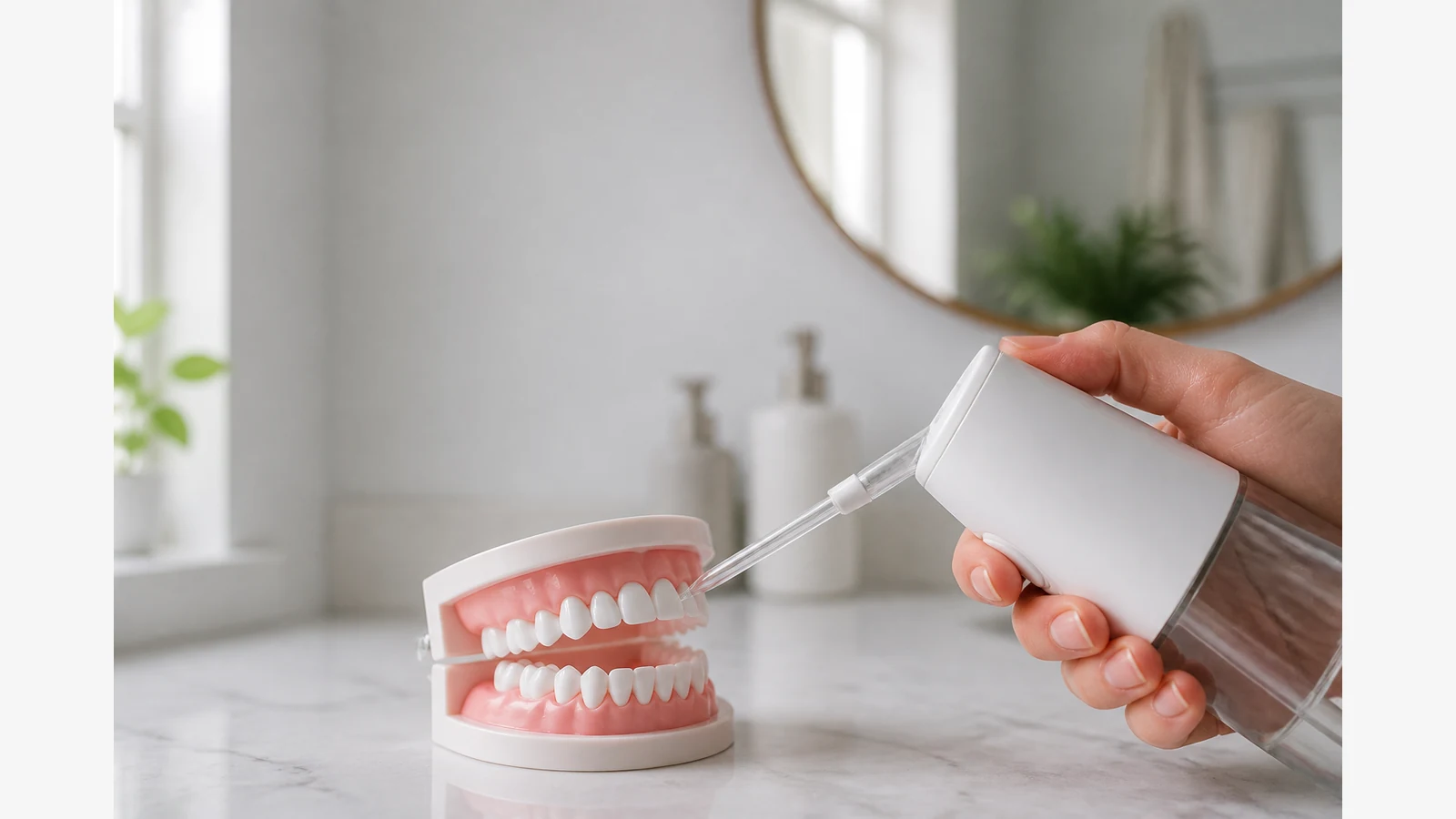
Best water flosser for implants: UK buying checklist
The best water flosser for implants in the UK is the one that lets you start on a low pressure setting, aim along the gumline around the fixture, and stick to a daily routine — not the one with the loudest brand claim. Prioritise adjustable pressure, a tip shape you can control around restorations, and a tank-or-cordless trade-off that fits your bathroom, then keep string floss or interdental brushes where your dentist still recommends them.
What “best” should mean around implants
Implants and bridgework create edges and contacts where food and plaque collect. UK dental clinic guidance often notes that water flossers can help around implants and bridgework as part of a wider home-care plan, not as a stand-alone therapy. Brand product pages likewise position specialist tips and adjustable pressure for implant cleaning routines — a useful buying signal, even if tip names and PSI figures differ by model.
Treat marketing language carefully. A water flosser is a home oral irrigator. It does not replace professional peri-implant maintenance, and no consumer listing should be read as an “implant-safe certified” clinical verdict unless your clinician says so.
UK buyer constraints that actually change the shortlist
- Bathroom space: countertop tanks suit shared households; compact cordless units suit small flats, travel, and hotel sinks.
- Refill cadence: smaller reservoirs need more top-ups — fine for one mouth, annoying for long evening routines.
- Tip availability: confirm replacement tips are easy to buy in the UK before you lock into a form factor.
- Charging: USB-charged cordless models travel well; mains countertop units need a permanent socket.
Decision path: tip, pressure, tank, and what to keep
- Tip type: choose a tip you can angle along the gumline without jabbing soft tissue. If your clinician recommends a specialist implant or plaque tip, follow that advice rather than a generic “best tip” blog list.
- Pressure ramp: begin on Soft or the lowest setting. Increase only after comfort. Sensitivity is a reason to stay low, not to abandon the habit.
- Tank vs portability: large tanks reduce refill pauses; cordless compactness improves adherence on travel days and gym-bag routines.
- Mechanical backup: keep floss threaders, Superfloss-style products, or interdental brushes for contacts your clinician still wants cleaned mechanically.
If you also wear braces or a fixed bridge, pair this guide with our practical notes on water flossing with braces and cleaning under a dental bridge.
Next step before you buy
When you want a compact cordless comparator rather than a bulky countertop unit, check the current tip set, pressure modes, and dimensions on the Synhope mini cordless water flosser product page. Use that page to verify today’s specs — do not treat any blog as a live catalogue of PSI or tip names.
FAQ
Can a water flosser replace my hygienist visits?
No. Home irrigation supports daily debris control; peri-implant reviews and professional cleaning remain clinician-led.
What if my gums feel tender at first?
Stay on the lowest comfortable setting, shorten sessions, and pause if pain, swelling, or unexplained bleeding appears — then ask your dentist or implant team.
Who should ask a dentist before buying?
Anyone with recent surgery, active infection, loose restorations, or unclear peri-implant instructions should confirm technique and tools with their clinician first.