How To Use A Water Flosser Uk
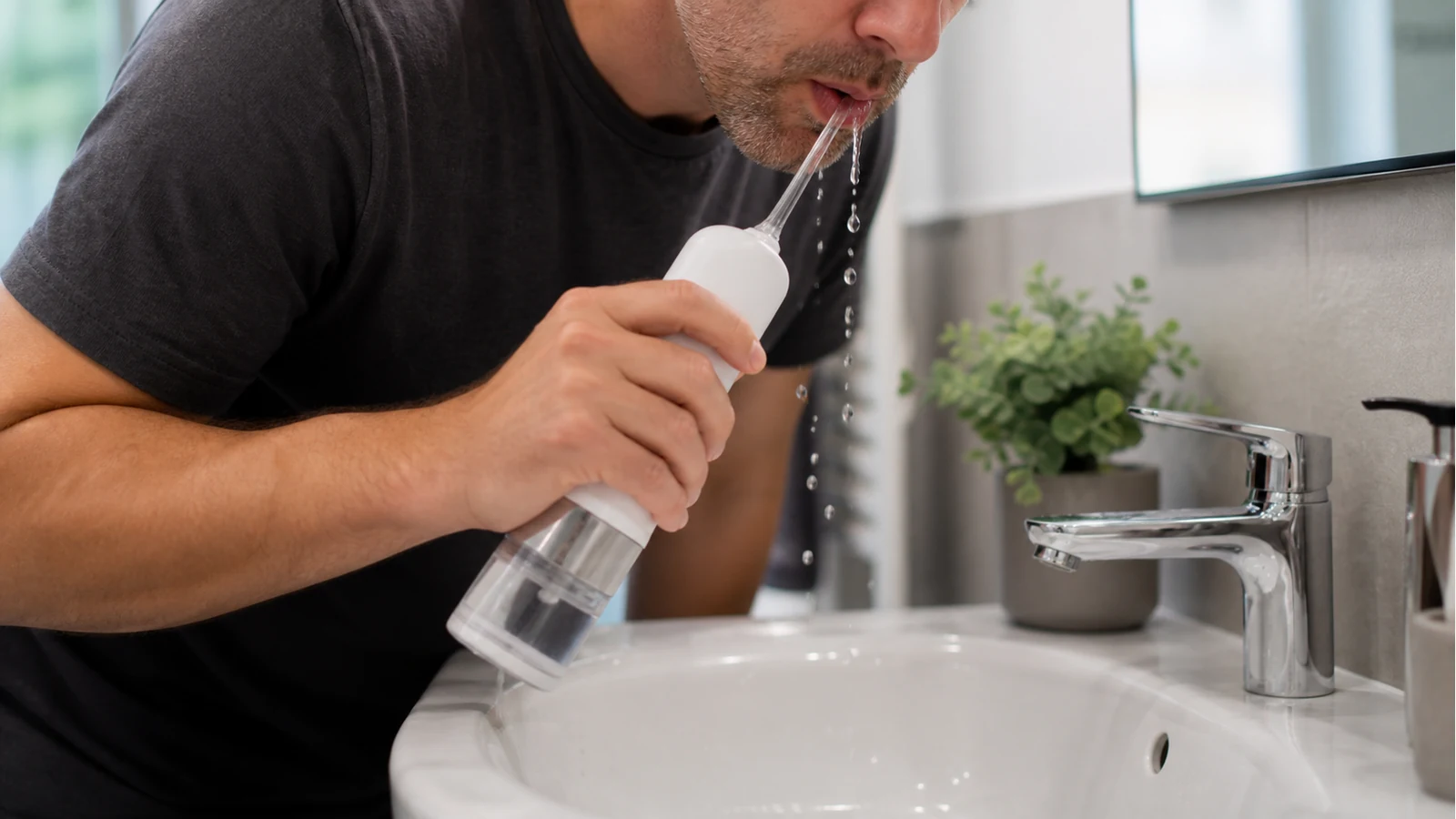
Direct answer: fill the reservoir with lukewarm water, start on the lowest pressure, put the tip in your mouth before switching on, lean over the sink, keep your lips mostly closed, and guide the jet along the gumline at roughly a right angle. Pause between teeth so the water drains into the basin instead of across the mirror.
This beginner sequence follows common UK public advice from Spotlight Oral Care UK and Oralgos UK. The GOV.UK oral hygiene toolkit supports daily interdental cleaning as part of prevention, while avoiding inflated claims about oral irrigators.
No-mess checklist
- Fill with lukewarm water. Cold water can feel sharp on sensitive areas.
- Attach the tip firmly and set the lowest pressure.
- Place the tip in your mouth before pressing power.
- Lean over the sink and let your lips partly close around the tip.
- Aim along the gumline, not straight down the throat.
- Move tooth by tooth, pausing briefly between contacts.
- Empty the reservoir, rinse the tip and leave parts to air-dry.
Sensitive gums path
Stay low for the first week or two if your gums are sensitive. Increase only when the lower setting feels controlled and comfortable. More force is not automatically better; consistency and correct aim matter more.
Where it fits in the routine
Many people use interdental aids before brushing so loosened debris is cleared before toothpaste. If you are unsure whether a water flosser should supplement or replace another aid in your case, read water flosser vs string floss.
When to pause
Stop and seek dental advice if bleeding is heavy or persistent, pain worsens, swelling appears, or you have had recent oral surgery. A how-to guide cannot replace instructions from your clinician.
Optional next step
If technique is solved but the device is not, use the cordless buying checklist to compare tank size, charging and support.