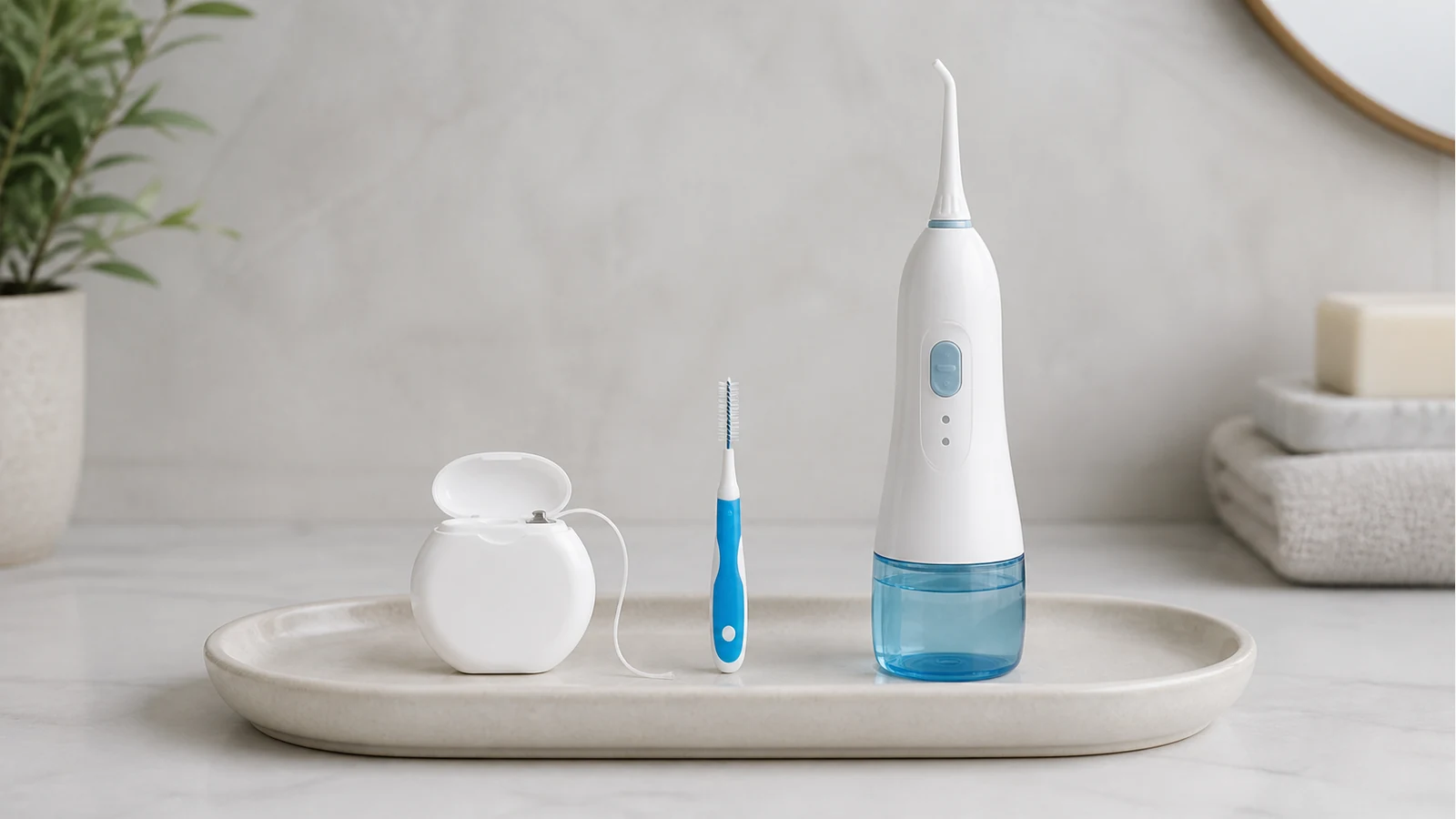
Water Flosser Vs String Floss Uk
Direct answer: in UK guidance, daily interdental cleaning is the core habit. Interdental brushes are preferred where they fit, floss or tape is useful for tight contacts, and a water flosser is best treated as an adjunct for convenience, appliances or dexterity rather than a universal replacement for string floss.
The clearest public anchor is the GOV.UK oral hygiene toolkit, which supports daily interdental cleaning and notes limited, inconsistent evidence for oral irrigators. SDCEP periodontal care guidance gives similar practical direction: interdental brushes where space allows, floss or tape for smaller spaces. Spotlight Oral Care UK describes water flossers as complementary and often easier around appliances.
Practical comparison
| Aid | Best at | Weak spot |
|---|---|---|
| Interdental brush | Cleaning open gaps with a small brush surface. | It must fit without forcing. |
| String floss or tape | Tight contacts between teeth. | Technique can be fiddly and hard to keep up. |
| Water flosser | Flushing debris around braces, bridges, aligner attachments or awkward areas. | It should not be presented as proven to replace all mechanical interdental cleaning. |
Who should keep floss or brushes primary?
Keep interdental brushes or floss as your main aid if your dentist or hygienist has shown you the correct size and technique, if you have periodontal care instructions, or if the spaces between your teeth are easy to clean mechanically. Add a water flosser only if it solves a real problem such as appliance debris or poor dexterity.
Who may add a water flosser?
A water flosser may make sense if you avoid floss because it is slow, if food catches around dental work, or if you wear clear aligners and need a practical clean before trays go back in. For technique, use the how to use a water flosser guide. For aligner timing, see the Invisalign routine article.
FAQ
Does bleeding mean stop? Light bleeding can happen when cleaning habits change, but persistent heavy bleeding, pain or swelling deserves dental advice.
Before or after brushing? Public UK prevention guidance places interdental cleaning as part of the daily routine; many people do it before brushing so debris is cleared first.